Are Modern Stories Replacing the Classics—and Should They?
Thoughts from an English teacher on reading, student motivation, and finding meaningful ways to bring both modern stories and classic literature into the classroom.
Pages and Pedagogy
4/26/20262 min read
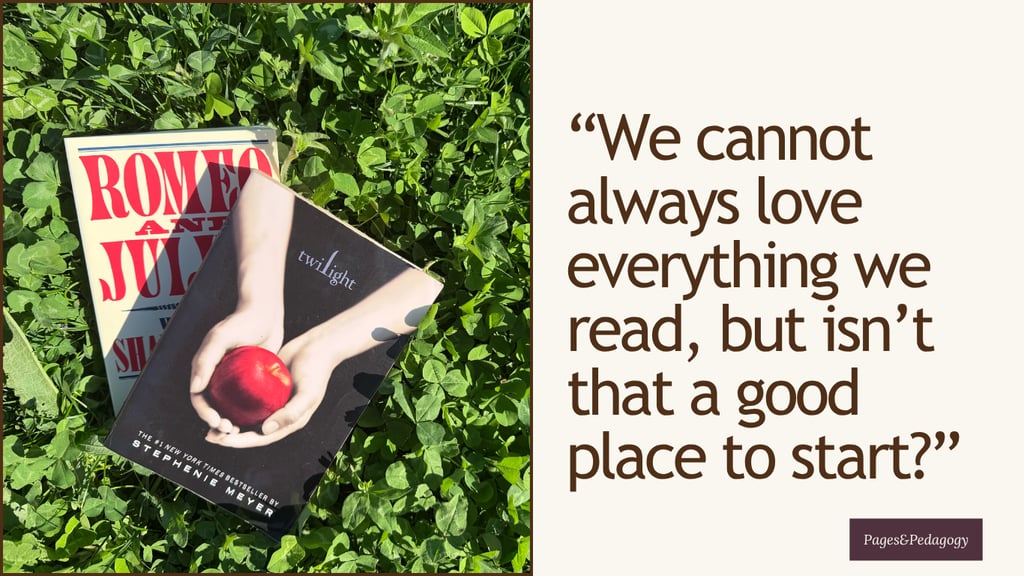
As an English teacher, I often ask myself, “How can I get more students to fall in love with reading?” Some would answer that it doesn't matter if they love to read as long as they know how to read. I cringe any time I hear that response, as I remember being fifteen and forced to read yet another Shakespeare play when all I wanted was to read Twilight. Don't get me wrong, I loved the play, but I went on to become an English teacher; many of my students won’t.
I imagine now what it would be like to read Twilight with my students instead of Romeo and Juliet. Is that insane? Inappropriate? Is the novel any more explicit than Act 3, Scene 5 of the play? One could argue that the latter works are more mature, but some of Shakespeare's other plays are also mature, and we wouldn't be reading those in the classroom. With that said, I continue to find the classics vital to student learning, but why not include them as intentional supplements rather than the main focus of a unit?
Exploring Shakespeare’s influence and how his work slips into the most unexpected stories while allowing students to analyze those connections themselves would increase engagement and strengthen critical thinking.
This shift toward supplementing classics does not only apply to Shakespeare. In my own classroom, shortly after the television release of Percy Jackson and the Lightning Thief season one, I chose to start with Percy Jackson instead of diving headfirst into The Odyssey. I was nervous about the change as I love The Odyssey and did not want students to miss out on such an epic classic. What I found was that students were more engaged and through Percy’s story they became curious about Odysseus and his journey. We compared characters and examined how the novel clearly draws from the classics. We even read “The Cruel Tribute” and paused to unpack the original language used in The Odyssey.
My students connected with Percy, especially those in a learning support setting as they explored Percy's own struggles and how he found strength in the parts of himself he once seemed to despise. A handful went on to read the entire series, students who had shown little interest in reading outside of class. I believe the more we read, the more we grow as thinkers. Reading comprehension is rooted in reading itself, but if students develop a negative association after years of being forced to read texts written centuries ago before they’ve had the chance to connect with characters in worlds they understand, how can we expect strong engagement?
That excitement sparked by relatable stories often leads to a desire to read more, and that leads to more learning.
We cannot always love everything we read, but isn’t that a good place to start? To answer my earlier question, “Are modern stories replacing the classics, and should they?” my answer is no. Modern stories should not replace the classics, but they should act as a ladder toward them. And I believe that process begins at home and in the classroom.